Financial clarity for creators, before the spending

I spent $40,000 marketing my own creative work and made zero sales.

I am an accountant. I read other people's numbers for a living, and I still did it. I now do one thing for creators: I read your numbers before you spend money reaching people, not after the money is gone.

No spreadsheets, no logins, no judgment.

  • USC Leventhal Accounting
  • Former Big 4 tax consultant
  • Accountant for an international e-commerce brand
  • Built and marketed an anime IP to $0
  • Los Angeles
Ethan Wu

Ethan Wu. I will be the person on your calls. There is no team behind me.

The receipt

My marketing worked. My shop was shut.

Here is what I paid for, in full, with my own money, to build an audience for a music and animation project. Most of it went to contractors running paid ads, email marketing and paid outreach. The one campaign that pulled properly was the one I built and ran myself.

$40,000Spent on marketing
5.1MImpressions delivered
8%Click-through rate
$0Revenue from it

An 8% click-through rate is a good number. Most advertisers would be pleased with it, and that one was mine: my creative, my targeting, my management. So I know the reach was not the problem. Thousands of people wanted to look at what I had made. What no click-through rate can tell you is whether a single one of them wanted to buy anything, and there was nothing properly for sale at the other end.

I built the garden. No butterflies came. It took me the better part of a year before I could say that number out loud without flinching.

Attention is not income. I had five million impressions, eleven thousand subscribers and no business. The mistake was not the contractors, and it was not the channels, because at their best they worked. It was that nobody, including me, checked whether one real person would pay for the thing before I paid to show it to a hundred thousand strangers.

I am also going to be honest about the limit of my own evidence, because it matters if you are deciding whether to trust me. I can prove the reach worked and I can prove nothing sold. What I never did was try to sell it by hand to ten people who already liked my work. So I cannot cleanly separate a wrong audience from a wrong offer. I can only tell you the money is gone, and that the test I skipped costs about $300.

Who this is for

You have the data. You are missing the meaning.

If you have said any of these out loud in the last six months, we should talk.

Bookkeepers record what happened. Tax preparers file the return. Almost nobody sits between the two and says: here is what your numbers mean, and here is the decision I would make next. That gap is where I lost $40,000. It is also the only thing I sell.

The difference

Recording is not reading.

What a bookkeeper tells you

  • Your contractor expenses were $4,200 this month
  • Revenue was $3,800 across platforms
  • Your profit and loss statement shows a net loss of $400
  • All transactions are categorised

What I tell you

  • 62% of your spend is on contractors, which is unsustainable at this revenue
  • Your merch makes 12% after shipping. Raise the price or drop it
  • At this burn rate you have seven months of cash left
  • You can afford to hire in Q3 if revenue holds. Here is the model
  • Do not buy ads yet. One person has to pay you first

Start here

The One Buyer Test

Most people should start here
$500 one time

Two weeks. I go through your actual numbers and your actual offer, and I answer one question: is there evidence that a real person will pay you for this? If there is not, we find the cheapest way to find out before you spend anything on reach.

  • A read of every revenue stream you have, reconciled to cash actually received
  • Cost per real customer, not cost per view, per click or per follower
  • Which of your products earns money after shipping and fees, and which quietly loses it
  • A written report, five to ten findings, ranked by how much money each one moves
  • A one page test you can run yourself for about $300 before any paid spend
  • A 30 minute call to go through it, with the recording
If it is not worth the money, I refund it and you keep the report. I am not going to argue with you about whether my own work was useful.

Why it is called that

Because it is the thing I did not do. I had a five million impression audience and no evidence that one person would pay me. Every number I was watching went up and none of them were revenue.

One buyer is not a small ambition. It is the only number that tells you the difference between people who like your work and people who will fund it. Everything after that is arithmetic.

What happens after

Your $500 is credited in full against implementation or any monthly plan, so nothing is wasted if you decide to keep working with me.

Plenty of people take the report and act on it alone. That is a good outcome and I would rather you did that than pay me monthly for something you do not need yet.

How it works

Three steps, no surprises.

Step 1

Free 15 minute call

A conversation about where your money actually stands and whether working together makes any sense. No spreadsheets, no logins, no pitch deck.

Step 2

The One Buyer Test, $500

The deep read described above, delivered as a written report you keep. Refundable in full if it is not worth it.

Step 3

Someone reading your numbers monthly

Only if you want it. Monthly interpretation, cash forecasting and a call where I tell you what I would do next.

What I do

From raw numbers to real decisions.

Spend decisions before the spend

Whether to run ads at all, what a good result would look like in cash, and what has to be true before you commit a budget. This is the service I most wish I had bought.

Multi-platform revenue clarity

YouTube, Spotify, Shopify, Patreon, Kickstarter, brand deals and merch, tracked and reconciled to money actually received, on their different payment schedules.

Cash flow and runway

How many months of money you have left, and whether you can afford that artist, that voice actor or that print run. Forward-looking models, not history.

Campaign and project accounting

Crowdfunding is not revenue. I work out what is left after rewards, shipping, fees and tax, so a funded campaign does not turn into a funded loss.

Pricing and margin

Is the vinyl profitable after shipping? Should the art book cost more? Where does each dollar actually go? Pricing decisions backed by your own numbers.

Monthly close and clean books

Reconciliation, categorisation, a profit and loss statement that means something. The foundation, done in QuickBooks Online, and then interpreted rather than filed away.

About

I am one person, and I have made your expensive mistake already.

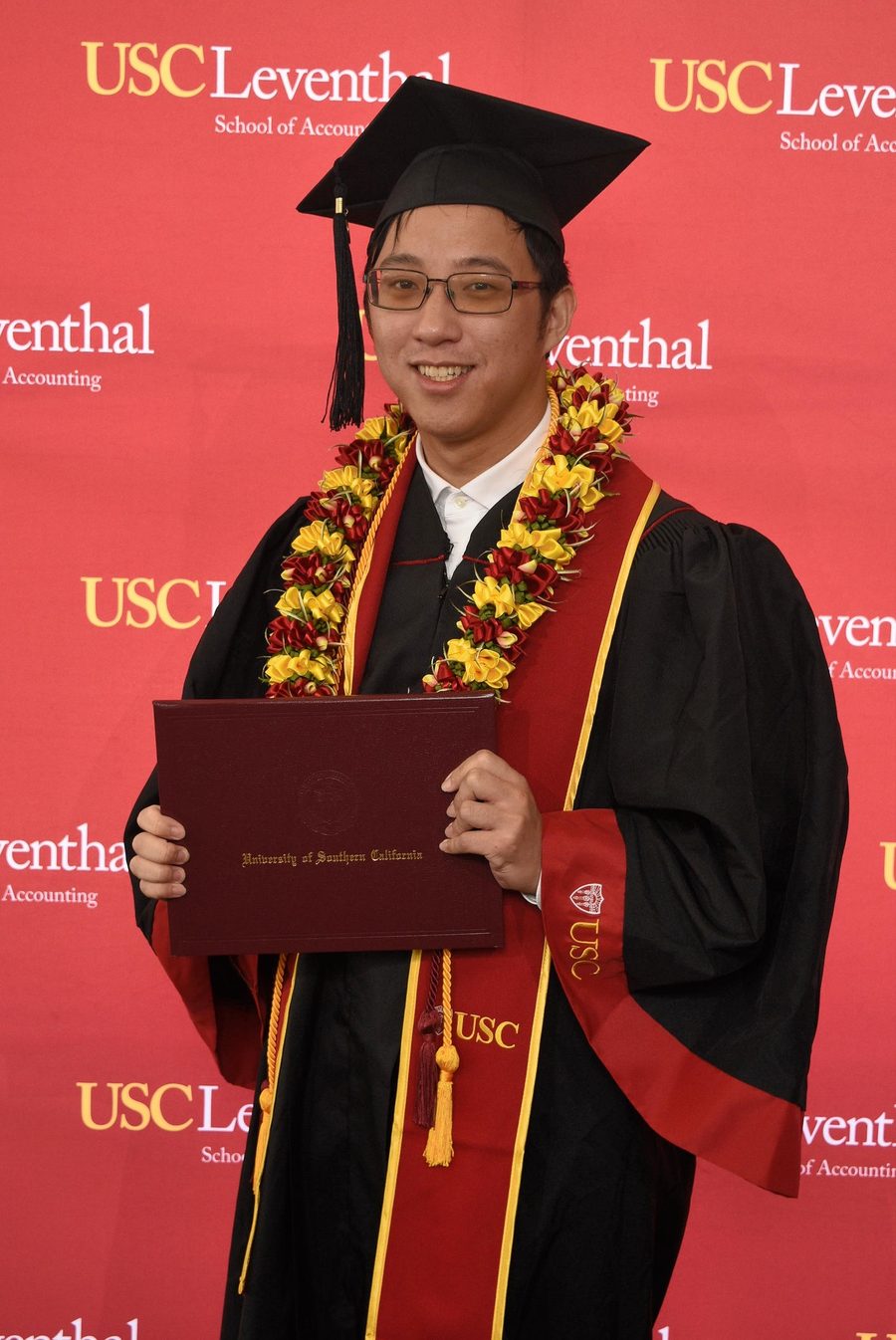
Ethan Wu, USC Leventhal School of Accounting

USC Leventhal School of Accounting.

I graduated from USC's Leventhal School of Accounting and trained at a Big 4 firm in tax, where I learned how financial reporting and analysis work at scale. Today I handle the monthly accounting close for the United States arm of an international e-commerce brand. That is the technical half.

The other half is that I built a creative business of my own. An original anime music project, with hired musicians, hired artists, a Shopify store, a visual novel, and revenue arriving from YouTube, Spotify and Apple Music on three different schedules. I funded it myself over several years and with significant resources.

I hired contractors to run the marketing, partly because I did not want to be the face of it. That is the part that took me a long time to admit. I made the creative and handed the ads, the email and the outreach to other people. The single best-performing campaign in the whole $40,000 was one of the few I kept and ran myself, which tells you something about what I was actually paying for. Five million impressions later I had an audience and no business, and the numbers I was proudest of were the ones that meant the least.

I say all of this calmly now, which is a thing worth explaining. It was not calm for a long time. Being able to state the number without defending it is the result of a lot of reflection, and it is the reason I am useful to you: your books are going to contain something you are embarrassed about, and I am not going to react to it. I have already said mine out loud, in public, with the figure attached.

So I am not selling you the idea that I am cleverer than your last accountant. Most accountants are perfectly competent. I am selling you the specific thing I learned by losing my own money: the difference between attention and demand, and how to tell which one your numbers are showing you.

Learn for free

Janus's Journal & Journey

My series translating what gaming and anime creators actually spend money on into the accounting terms their books need. The art commission, the Kickstarter reward, the editor, the ad spend: what each one really is on a set of financial statements, and why it changes what you owe and what you keep. No fluff and no upsell, including the arithmetic I got wrong myself.

Subjects covered

  • Why an 8% click-through rate can still mean zero revenue
  • What crowdfunding money is actually worth after rewards and shipping
  • The cheapest test to run before you pay for reach
  • What you can and cannot deduct as a creator, in plain English
  • Which creator costs are expenses and which are assets you have to capitalise

Pricing

Priced so the first step is easy to say yes to.

Everything starts with a free call. The One Buyer Test is credited against anything you buy afterwards.

Start here

The One Buyer Test

$500

One time, fully refundable, credited later

  • Full read of your numbers and your offer
  • Written report, findings ranked by impact
  • The $300 pre-spend test, written for your business
  • 30 minute review call

Implementation

$1,500

One time, systems built and handed to you

  • QuickBooks Online set up with a chart of accounts built for creators
  • Multi-platform revenue tracking that reconciles to cash
  • A monthly close process designed around your business
  • Reporting templates and full documentation, so you can run it yourself
  • 60 minute training session on the systems

Monthly

$750 to $3,000 / mo

Priced on transaction volume and number of platforms

  • Monthly bookkeeping, reconciliation and clean books
  • Monthly interpretation of profit, loss and cash flow
  • Cash forecasting and runway modelling at the higher tier
  • One or two strategy calls a month
  • Year end package organised for whoever files your return

Currently onboarding founding clients, so availability is limited and the prices above are the ones I will honour for the first year.

Questions

Frequently asked.

How is this different from a bookkeeper?

A bookkeeper records what already happened and hands you a tidy file. I read that file and tell you what to do next. Both matter. Only one of them changes a decision.

Do you do my taxes?

No. I do not prepare or file tax returns, and I am not a licensed CPA. What I do is everything between the bookkeeping and the return: I interpret your numbers, build the systems that keep them clean, and make sure whoever files your return receives an organised, accurate package with no surprises in it.

I am just starting out. Is this too early?

If you are about to spend money on reaching people, it is exactly the right time, and it is the cheapest hour you will ever buy from me. If you are earning nothing and spending nothing, save your money and watch the free videos instead. I will tell you that on the call rather than sell you something.

What if I do not use QuickBooks?

QuickBooks Online is the only accounting platform I work in. If you are on something else, I will tell you honestly whether a migration is worth it for your size, and if it is not, I am not the right person.

Why should I trust an accountant who lost $40,000?

Fair question, and it is the whole proposition. You are not hiring someone who has never been wrong. You are hiring the one who has already made the specific mistake you are about to make, at his own expense, and who kept the receipt. Nobody who has only read about this in a book can tell you what it feels like when the metrics look healthy and the bank account does not move.

How long is the commitment on monthly plans?

Month to month. No minimum term, no notice period. If reading your numbers stops being worth $750 a month, you should stop paying me $750 a month.

Let's talk

Book a free 15 minute call.

No spreadsheets, no logins, no judgment. A conversation about where your money stands and whether working together makes sense. If it does not, I will say so.

Available Monday to Saturday, 3:00 PM to 11:00 PM Pacific.

Or, if you would rather just hear me talk for 49 minutes first, the podcast is here.